Scaling with intent: What comes after growth?
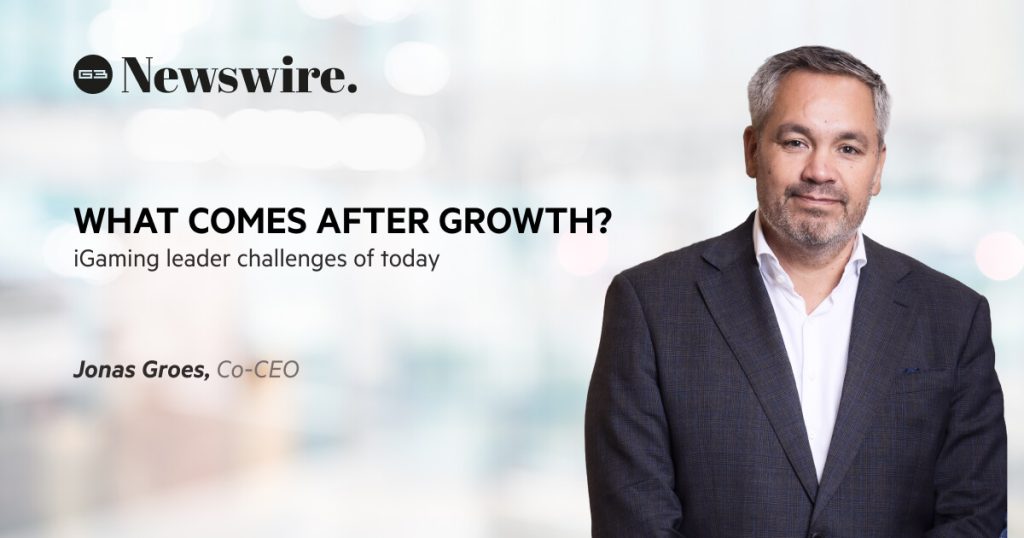
As Jonas Groes, co-CEO of EveryMatrix, explains, the challenge facing today’s iGaming leaders is no longer growth alone, but building the structure, discipline and clarity required to scale sustainably in an increasingly complex and competitive market.
There’s been no shortage of growth in iGaming over the past few years. New markets have opened, new products have launched, and consolidation has steadily reshaped the competitive landscape. But beneath that momentum, a more difficult question is starting to take hold – not just how businesses grow, but how they scale.
EveryMatrix undoubtedly has wind in its sails, but co-CEO Jonas Groes is focused on something harder: building the structure to sustain it. From decision-making and product strategy to long-term ambition, Jonas recently joined the G3 Podcast to explain what scaling properly looks like in practice.
Jonas, your background isn’t the typical route into this industry. When you look at EveryMatrix now, what feels familiar and what feels completely different?
What feels familiar is the level of talent and engagement across the organisation. You’re working with very capable people who are committed to what they do, and that translates well from my time at EY. What’s different is the structure and the speed. This is a much more product-driven business with faster decision-making and less formal governance, which creates a different kind of environment where you need to balance agility with the right level of control.
Layered on top of that, you’ve got the co-CEO structure with your brother. On paper that’s trust, but in reality it’s about alignment under pressure. How have you found that balance?
Trust is the foundation and that part is very strong for us. We know each other well and operate from that platform, which makes decision-making easier. At the same time, this is a fast-moving organisation, so it’s about maintaining that speed while still making the right decisions.
I naturally bring a more structured approach from my background, but the key is ensuring that structure doesn’t slow down execution, because time to market is critical.
Are roles and responsibilities clearly split, or more fluid?
It’s more fluid, but there are natural areas where each of us takes the lead. I focus more on the commercial side, client relationships and organisational elements, while my brother is closer to the product and software side. That said, we speak constantly and make decisions together, so it’s less about rigid ownership and more about ongoing alignment.
EveryMatrix has been private for nearly two decades. What does that allow you to do, particularly at this stage of growth?
It gives you the ability to think longer term and avoid some of the short-term pressures that come with being publicly listed. That doesn’t mean there’s no pressure – there’s always pressure to perform – but it does allow for more deliberate decision-making around where to invest and how to build the business over time. That becomes increasingly important when you’re thinking about scaling rather than just growing.
When you came into the business, what stood out – not the obvious strengths, but the areas where you felt you needed to move quickly?
My background naturally pushes me towards structure, particularly on the commercial side. There are opportunities to be more structured in how we engage with key clients, how we manage those relationships and how we capture their perspective. It’s about being closer to our most important accounts while ensuring we don’t over-customise to the point where the product becomes difficult to scale.
Last year was a big one – strong growth, lots of deal activity, plenty of momentum. How do you make sure that’s something you build from rather than something you look back on?
It comes back to balancing product and client focus. We have a very strong product, so the question is how we take that to market, how we position it and how we ensure clients get the most value from it. That means strengthening the connection between what we build and how it’s used, while maintaining the ability to scale effectively as the business grows.
Internally, what does that mean – is it structure, people, product, or all of the above?
It’s a combination, but the product is already strong. Where I see the biggest opportunity is in how we bring that product to clients, how we communicate its value and how we build stronger, more structured relationships around it. That’s where you can create more consistency and ultimately scale more effectively.
The wider industry has been very active, particularly with consolidation and M&A. From your perspective, does that strengthen the ecosystem or risk limiting competition?
I see it as a natural evolution. There’s still a lot of innovation happening, particularly with new technologies like AI, so I don’t see consolidation as limiting competition. It’s more about how companies position themselves within that landscape and where they can create value for their clients.
Where does EveryMatrix sit within that – are you looking to be active in that consolidation?
We already are, and I expect that to continue. Acquisitions have been an important part of our growth alongside internal development. The ambition is to continue growing and to be one of the companies shaping the industry, rather than being shaped by it.
On the product and market side, you’ve made deliberate moves. How do you decide where to lean in versus where to stay disciplined?
There’s always an element of opportunism, but discipline is just as important. Europe remains a very strong foundation for us, with further growth potential, while markets like Africa and LatAm offer longer-term opportunities from a smaller base. It’s about balancing those areas and making sure we don’t spread ourselves too thin.
What’s the internal filter for what’s worth committing to properly?
It comes down to where we can create meaningful value and where we have the right platform to build from. We need to focus on areas where we can scale, rather than chasing every opportunity, and that requires being selective about where we invest time and resources.
Looking at the 2030 ambition – becoming a top-tier global technology provider – what does “top tier” mean to you?
For me, it’s about working with the best clients in the industry. That’s where the most interesting challenges are and where real development happens. It’s not just about scale, but about partnering with companies that have the ambition and capability to grow, because that’s how we grow as well.
So, it’s as much about who you work with as what you build?
Exactly. It’s a dynamic industry, but you still need to be selective. We want to work with partners who are investing in their own growth and who we can grow alongside, rather than spreading ourselves across lower-impact relationships.
You’ve talked about taking a longer-term view. What does that force you to do differently today?
It forces clarity. Setting an ambition is one thing, but the challenge is translating that into something the whole organisation understands and believes in. Not everyone will yet be able to articulate what 2030 looks like, so part of the work is aligning people around that vision and making it tangible in day-to-day decisions.
Bringing it back to the next 12 months, what really matters?
The focus is on strengthening how we work with existing clients and building more structured, engaging partnerships. At the same time, we need to ensure we can scale efficiently as we grow, particularly with new clients and increased demand. That means improving how we manage integrations and looking at how technologies like AI can make those processes more efficient over the next year.
The original version of this article was published by G3 Newswire.
Ready to start a conversation?
The key for us as a true B2B iGaming software provider is to help gaming operators implement bold ideas and unleash their creativity. Everything is possible.
Talk to an expert